
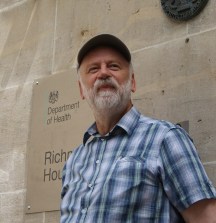
Dr. James Brophy and Dr. Margaret Keith (picture from the Windsor Star) and Prof Andrew Watterson.
Researchers from the University of Stirling’s Occupational and Environmental Health Research Group (OEHRG), receive an International Award from the American Public Health Association for their research which found that women working in certain occupational sectors face an elevated breast cancer risk.
The two studies were led by Dr James Brophy and Dr Margaret Keith, of Stirling’s OEHRG and the University of Windsor, Ontario, and co-author and Head of Stirling’s OEHRG, Professor Andrew Watterson.
The initial study published in Environmental Health found a 42 per cent increased breast cancer risk for any women employed in occupations where they were exposed to high levels of chemicals that were identified as either mammary carcinogens or endocrine disrupting chemicals.
The second qualitative study published in New Solutions provided additional evidence to support the findings of the first study.
The award is very well deserved and we are hugely grateful to the team of researchers for bringing some much needed clarity to the issue of occupational breast cancer. This work will be greatly appreciated by women who know the work they do is linked to their breast cancer and help with eliminating those chemicals we know are causing greatest harm to workers, but also to a lesser degree consumers and our environment. Well done all! Much congratulations.
Press release from Stirling University:
News Clip from Windsor Star:
Published by wildcardenvironmentalist
Helen Lynn has worked on issues linking women, gender, health and the environment since 1995, initially at the Women’s Environmental Network where she was health co-ordinator for 12 years, then as a freelance consultant. She has worked internationally and at EU level with Women in Europe for a Common Future and is on their International Advisory Board. Her campaign work began with Putting Breast Cancer on the Map, which encouraged women to map local sources of pollution alongside incidence of breast cancer and she was one of the founders of the No More Breast Cancer Campaign. She is on the Soil Associations Health Products Standards Committee which develops and keeps under review standards for organic health and beauty care products. While at WEN she and the health team initiated the Getting Lippy campaign on harmful ingredients in cosmetics, the campaign covered all aspects of the issue including information on toxic ingredients, making your own cosmetics, misleading labelling and advertising of the products and which alternatives are available. Other campaigns Helen worked on included the Ban Lindane (a toxic pesticide used on crops) Campaign, Healthy Flooring, Enviromenstrual, and Multiple Chemical Sensitivity. She currently facilitates the Alliance for Cancer Prevention which works with occupational and environmental health specialists and activists to challenge the existing emphasis on control and treatment of cancer as the only way forward and to get equal recognition for primary prevention, particularly in relation to environmental and occupational risk factors. In 2014 along with fellow breast cancer activists she began the From Pink to Prevention campaign which aims to move the agenda towards Stopping Breast Cancer before it Starts.
View all posts by wildcardenvironmentalist



 allianceforcancerprevention.org.uk